


Do Blogs Still Help With SEO? Hell Yeah They Do!

Do Blogs Still Help With SEO? Hell Yeah They Do!
There are very few channels in marketing left that are free, that will get your brand seen, that you can 100% control, and that are super good at generating impressions, clicks and, if done properly, leads.
I'm talking about blogs.
Just hold fire before you roll your eyes. Most businesses write the odd blog, and it does the square root of ... nothing. I'd wager a bet that it's not because the content idea wasn't worth reading, but because the structure of the blog was wrong and the process of creating the blog was wrong.
So, are blogs still a good SEO tool in 2026, for Google and LLMs?
More than you can imagine, and we have proof.

I'm not saying this because somebody told me content marketing is important, or I've read it on the World Wide Web. I'm saying it because we've seen the cause and effect personally, for us and our clients.
We see what happens when we follow our blog process. Our articles appear in Google, all of them have reached number one for the exact questions or similar search terms they answer, and a lot have been referenced in AI-generated answers alongside much bigger names.
Some proof from a blog that went live on 19/11/26.
Take that, Mailchimp and Reddit, with your massive marketing budgets and huge editorial teams!
We've seen our own content appear ahead of Google's published content for particular searches. That's not a claim that our entire website has more authority than theirs. It doesn't and never will.
It's just proof that a well-targeted, focused, original article built around lead/customer questions can slay a giant and put my brand at the top of the mountain.
So imagine what that does for clients' confidence when we can fire up the Google machine and show them firsthand our Jedi SEO skills.
Instant proof that David can beat Goliath, and it cost £0.
Name me a marketing activity that can rank you number 1 in Google for £0.
The catch? Publishing a blog is not a strategy.
The process that gets it researched, written, connected, distributed and measured is the strategy.
This is what we have learned from doing the work, not from repeating a generic SEO checklist or letting ChatGPT write our blogs.
What I See as a Business Owner: The Questions Are Already in the Sales Conversation
Ahhhh... You weren't expecting this, were you?
A prospect comes to us and asks, "Do I need a CRM system? Will it actually make my business more money?"
Another says, "Email marketing doesn't work for us. We keep sending emails and get nothing back."
A third is frustrated that their website has traffic but no enquiries.
Those are not hypothetical content personas. They are the kinds of questions and objections that come up in conversations with prospective clients.
They tell us what people are worried about, where they are stuck and what a useful answer should help address.
Because at the end of the day, our job as a business is to help people overcome a problem!
This is the first place where I think a lot of business content goes wrong.
A team decides it needs to publish four blogs a month, selects broad themes and commissions generic AI copy.
The finished articles may look polished, but they often lack the uncomfortable, commercially specific questions customers actually ask and the unique perspective your business can add.
In our experience, that unique perspective is the difference between content that does nothing and content that goes off!
If someone asks whether a CRM will make money, an article explaining what CRM stands for is not enough.
They want to know where revenue could improve, what has to change in the sales process and where buying software alone will not solve the problem.
That practical answer is where founder-led experience becomes valuable, and it's something AI can't fake!
What Our Own Search Data Shows
A client's daily Google Search impressions rose from around 70 to approximately 1,025.
That is an increase of roughly 1,364%.
In our three-month Google Search Console review, blog articles featured heavily among our highest-impression pages.
One article generated approximately 8.5k impressions and another around 7.5k, compared with around 1.4k for their homepage in the same comparison.
These are observations from a single reporting period, not an industry benchmark.
For MSM, on average, we see blogs reach positions 1–3 in Google within 48 hours.
This post went live on the 10th of November. Within 48 hours, it was ranking above some big names.
I am not claiming all of these articles rank number one everywhere, every day, but as a percentage of all posts, 90% do.
What I am saying is that repeated first-position examples, AI citations and measurable search visibility across different subjects are strong reasons to take the underlying process seriously.
Why Big Domains Don't Automatically Win Every Search...
I didn't know the answer to this, so being a nerd, I did some research.
Large publishers have advantages, obviously. Big DAs, brand recognition, established links, extensive editorial resources, and broad topical clusters and coverage.
Yet search is resolved query by query.
A focused answer to a narrow, commercially meaningful question can be more useful than a broad article on the same general subject.
That's the opportunity we have found.
We are not trying to beat Google or Mailchimp at being Google or Mailchimp.
We are trying to answer a buyer's question better, with first-hand context, clearer evidence and a page that connects to the next question they are likely to ask.
Just like I'm doing now.
This blog isn't written by ChatGPT. Maybe you've guessed from the s@@t grammar, but that's deliberate, so you know this is written by a human.
Google's own Search Central guidance asks creators to prioritise helpful, reliable, people-first content, original information and first-hand expertise.
It does not promise that any formula will guarantee rankings.
Our experience is consistent with those principles, but our outcomes remain our outcomes.
What Badly Executed Blogs Look Like
Bad blogs often start with a vague topic, produce a generic summary of other people's opinions, add a handful of keywords and end at publication.
Nobody checks whether the topic matches a real customer question.
Nobody looks at where the reader goes next.
Nobody can say whether the article contributed to an enquiry.
Our approach starts at the other end.
What pain is the customer experiencing? What evidence have we seen in practice? And what would a useful, commercially honest answer look like?
We then validate the language people search for, plan the topic and related terms, and build an article that makes an argument rather than just filling space.
We didn't always follow this process, and some of our blogs bombed.
One of our house rules is a combined keyword penetration target of exactly 1.9% of the article word count, counting an agreed set of primary and secondary terms.
That is our internal writing discipline, not a Google requirement or a proven ranking factor.
I've been told countless times that this method doesn't work.
Look, we've tested with less, with more, and for some reason, 1.9% works every time!
The Missing Piece in Most Content Plans Is Internal Linking
If a reader lands on a blog about SEO and then leaves, we have won a click but may have lost a commercial opportunity.
So we connect relevant articles to each other and to the service pages that can help someone act on what they have learned.
That's why our content on search visibility connects naturally to articles about website traffic, full-funnel marketing, conversion improvement and lead generation.
The links are there because the next question matters, not simply to tick an SEO box.
For example, if your website attracts visitors but few enquiries, our article 15 Reasons Your Website Isn't Getting Traffic explores the problems that prevent useful visibility.
If you want to understand the bigger customer journey, read What Is Full-Funnel Marketing?
And if visibility is not turning into action, see Best Changes to Increase Website Conversions Fast and our Conversion Rate Optimisation and Website Performance service.
There is also a reverse-linking step.
When a new blog goes live, we identify established relevant articles — especially those with more than 1k impressions and strong clicks — and add contextual links from them to the new piece.
The new article is not left isolated.
How We Know Whether a Blog Is Working
The first check is immediate readership.
We look in Google Analytics to see whether anyone is landing on the new article.
One recently launched email marketing article had 23 readers in its first early reporting window.
That is not proof of a lead, but it is evidence that people reached the page.
Within approximately 20–48 hours, we check indexing and early search visibility.
Then we watch Google Search Console for the search queries, impressions, clicks and positions that develop.
This matters because being indexed, being visible, getting clicked and producing a lead are four different outcomes.
We also review Microsoft Clarity to understand how readers move around the site, including whether they follow our internal links from an article to another relevant page.
That lets us build performance targets rather than celebrate impressions in isolation.
For example, suppose an article generates 1,000–1,500 impressions in a week, 76 clicks to the article and 10 onward clicks to other website pages.
The next question is: how many of those journeys become qualified enquiries?
These are illustrative funnel targets from our process, not a claim that every blog produces exactly those numbers.
The measurement chain is straightforward:
Search impression → Article click → Onward website visit → Enquiry → Qualified lead.
We use Search Console, Google Analytics, Microsoft Clarity and lead records to test each stage, while recognising that these tools count different things.
What About AI Search and Citations from LLMs?
Our approach also considers the way people phrase questions to AI assistants.
We include direct, conversational questions and useful answers, not just conventional headings.
We have seen our content cited in AI-generated responses, including alongside well-known sources.
That does not mean adding an FAQ guarantees that an LLM will cite you.
It means we are making the content clear, specific and useful for both human readers and systems that summarise sources.
Original evidence and a clearly attributable point of view matter far more than dressing generic text up as an AI answer.
We explore the changing search landscape in Is Google Search Being Replaced by AI?
Questions We Are Often Asked...Do blogs still help with SEO in 2026?
Yes. Our own Search Console reporting shows substantial visibility from blog articles, including query-specific first-position examples.
A blog still needs a topic, evidence, useful content and distribution.
Can a small business blog outrank Google or Mailchimp?
Yes, for a particular search query.
We have documented examples where our articles appeared above those brands.
That is not a promise that the same order will appear for every person or query.
Can a new blog rank number one within 48 hours?
It can happen; we have observed rapid rankings.
We check within 20–48 hours, but indexing or ranking is not guaranteed in that window.
How can a blog get cited as a source by ChatGPT or other AI systems?
Write a direct, well-supported answer, include original experience and evidence, and make the information easy to interpret.
Citation selection is outside the publisher's control.
How do you measure whether a blog generates leads?
Connect Search Console impressions and clicks to Analytics visits, Clarity journeys and actual enquiries.
Measure each step separately.
Is keyword density of 1.9% required by Google?
No. It is a rule in our own content process, not a search-engine recommendation or ranking guarantee, but our in-house testing has proven it works more often than not.
The Conclusion... Blogs Work When the Process Works
I have watched businesses publish content without knowing why it exists, what it should rank for or what happens after somebody reads it.
I have also watched what happens when we apply a disciplined, customer-led process: our articles gain visibility, attract clicks, compete with major publishers on specific queries and sometimes earn citations in AI-generated answers. That is why my answer to "Do blogs still help with SEO?" is hell yes. Not because blogs are magic.
Because a blog can be a carefully designed answer to a real customer problem — and the beginning of a measurable commercial journey.
Interested in This Subject? Here Are Six More Blogs to Read
- Is Google Search Being Replaced by AI?
- 15 Reasons Your Website Isn't Getting Traffic
- What Is Full-Funnel Marketing?
- Best Changes to Increase Website Conversions Fast
- How Do I Get Leads Through My Website in 2026?
- 10 Proven Strategies to Increase Your B2B Lead Generation Without Increasing Ad Spend
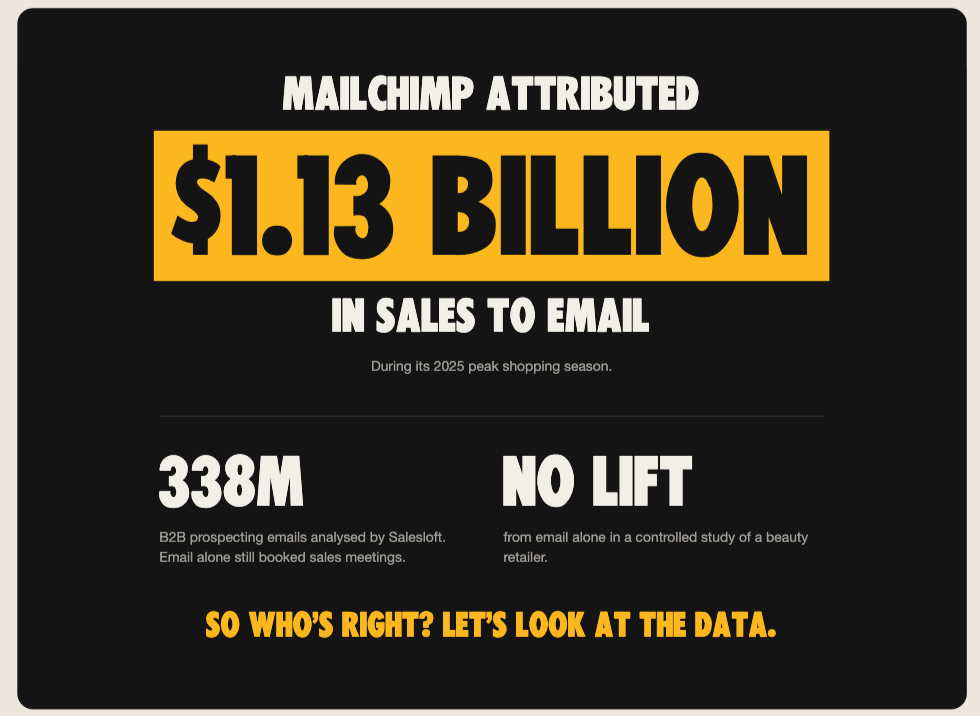
We've reviewed research from major marketing platforms, independent research organisations and academic studies to find the truth. What we found wasn't what we expected.
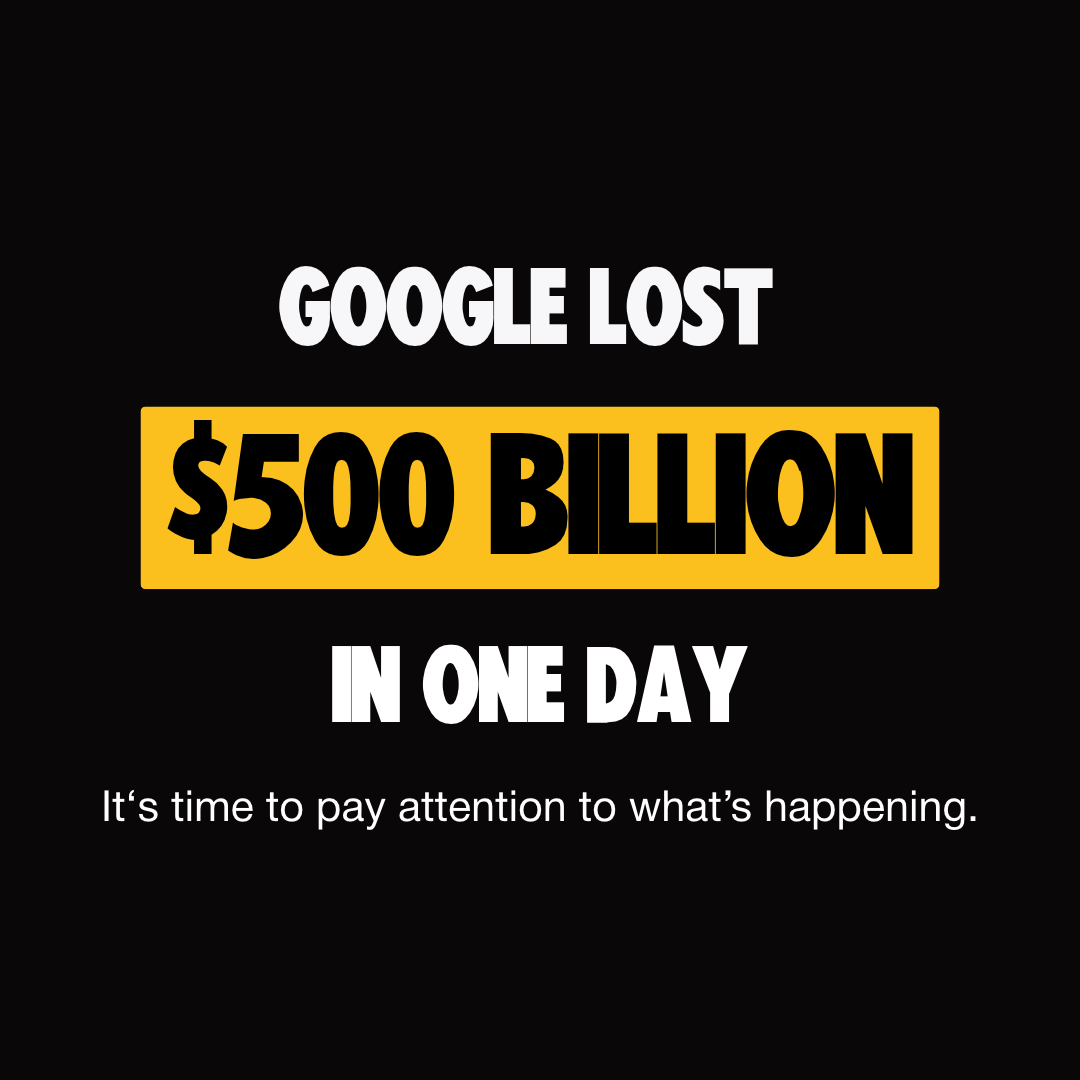
Traditional search is changing faster than most businesses can keep up with.