


How Marketing Automation Is Transforming UK & US SMEs in 2026

Marketing Automation Is Transforming UK and US Businesses.
et many businesses are still problem unaware, solution aware, or somewhere in between. Many don't realise they have a problem to solve, while others know they have a problem but aren't aware that marketing automation is the solution.
so, I'm writing this blog hoping the algorithm puts it in front of every small to medium sized business turning over between £100k and £3 million in the UK and U.S
Why? Because what you're about to read will help you compete at a level you didn't think was possible. Read it. Implement it. Your business will most likely make more money, save money, save time, run better, and reduce the risk of losing business you should never have lost in the first place. I can't stress this enough. If there was ever a cheat code for business owners, this is it.
Quick caveat: this only works if you actually use it. Buy the software, let it gather dust, and nothing will change.
Now let's get to it.
Over the last two years there's been a quiet evolution happening in marketing automation. Something large corporations have had access to for years through enterprise CRM marketing automation systems. SMEs were priced out. Not anymore. The tools, the systems, the capability are now available to any business willing to use them. And the businesses that have adopted marketing automation software are seeing results across their marketing, sales, operations and business management that most owners didn't think were possible at their size.
Let's get into it.
While you or your sales teams are manually following up leads, sending individual emails and updating spreadsheets like it's 1990, your competitors have gone full tech. They have switched to a full or partial automated marketing and sales system. They've built a CRM marketing automation system that does what you're still doing by hand and it runs 24 hours a day without them touching it. The data is conclusive and the tech giants are the living proof. HubSpot's data shows businesses using marketing automation generate 129% more inbound leads and launch campaigns 68% faster than those that don't. Salesforce puts the increase in qualified leads at 451%. Forrester calculates the ROI at £5.44 for every £1 invested. Just think about those numbers for a second. How much would those performance increases mean to your business per year.
Pause for a second and do the math.....
Now consider that marketing automation software and CRM marketing automation systems can start from as little as £29 per month. This isn't about whether you should embrace the tech. This should be a serious question about whether your business can afford to keep operating the way it does while the businesses around you are producing significantly more activity with less operational overhead.
Let me explain some numbers so we can start to think bigger picture.
These numbers should make you stop and think
Before getting into what marketing automation software does, whether they help make more money, and if it's worth understanding the scale of the shift already underway.
According to Salesforce's State of Marketing Report, businesses using marketing automation see a 451% increase in qualified leads compared to those that don't. And I can attest to that for MSM. We use CRM marketing automation systems to lead generate top of funnel activity across email, WhatsApp, SMS and social media consistently, 24/7, helping us deliver value in exchange for a first name, last name, email address and the holy grail, a WhatsApp number. After that, they are in our marketing automation funnel and we have the ability to provide even more value, helping businesses start to solve their biggest marketing or sales challenge before any money has even been exchanged.
What that means is leads at a very early stage are building trust with MSM, getting the help they need, proof we can help them and naturally moving through our marketing automation system. We score every lead's interaction with our brand, our touchpoints, our free guides, downloads and checklists. So within a matter of weeks or months, we can see who has the highest amount of points, aka who is most likely to convert into a paying customer. This allows us to target leads who are in the buying phase, rather than window shopping.
Let's continue.
HubSpot's research shows that companies using CRM marketing automation systems to manage their sales pipeline are 29% more likely to report revenue growth year-over-year. Forrester puts the ROI of marketing automation software at £5.44 for every £1 invested, with top-performing implementations returning over £8.70. McKinsey's data shows AI-powered marketing campaigns deliver 22% better ROI, 32% more conversions, and 29% lower acquisition costs than manual methods.
When these marketing automation systems are set up properly, with the right customer journey strategy, the outcomes are significant, measurable and well worth the investment. So the question for UK small and medium-sized businesses isn't whether marketing automation works. It's why are you sat on the fence. What do you need to see to make the jump?
What a CRM does now — and why most businesses are using it wrong
Most people think of a CRM as a contact database. A machine we feed that does almost nothing, like it was back in the early 2000s. A place to store names, phone numbers and notes from the last call. The part of sales every sales person hated doing and almost no one in the business did anything with.
In 2026, a CRM with marketing automation software, sales and AI native features manages your entire revenue operation. It handles the sales pipeline from first touch to closed deal. It manages your marketing campaigns, tracks which content prospects engage with, and tells your sales team exactly when to follow up and why. It logs every interaction across every channel, email, phone, SMS, WhatsApp, social, while automatically updating your sales pipeline stages, opportunity value and notes, giving you a single timeline of the relationship and a live report of exactly where all of your money is. That in itself should have business owners lining up around the block. Ever heard you can't control what you can't measure? That is absolutely true for your sales and marketing automation systems.
Still not convinced?
One thing every business can't control and needs more of, especially in months with one or two bank holidays, is time. More time to market to ideal customers. More time to sell. More time to deliver services. More time to chase invoices and get the money in the bank. Every hour spent manually updating a spreadsheet, sending a follow-up email or trying to remember where a conversation left off is an hour not spent on work that generates revenue. CRM marketing automation systems remove those lost hours from the equation. Time is money. Being more efficient with our time makes money. But if you're still wondering whether a CRM helps generate revenue, there is one massive caveat. Only when it's built to run your pipeline rather than just store personal data. If you want to understand more about whether a CRM helps generate revenue, we've written about it in detail.
The businesses getting the most from CRM marketing automation systems aren't using them as a record-keeping tool. They're using them as the engine that runs their marketing automation software and sales pipeline. Opportunities move through stages automatically. Tasks are created when prospects take certain actions like receiving and approving quotes or signing contracts. Sales managers can see exactly where opportunities are getting stuck and can manage them forward instantly with the team.
From project management to pipeline management: the CRM as a business operating system
One of the most underused capabilities in modern marketing automation software is project and workflow management. Most small businesses have their sales pipeline in one system, their client work in another, their invoicing in a third and their communication scattered across email, WhatsApp and Slack. The cost of that fragmentation is enormous and it's invisible until you add it up.
A CRM marketing automation system like HubSpot, Salesforce, GoHighLevel and others consolidates some or all of it, depending on subscription models.
Let's look at a real use case.
When a lead converts to a paying customer, a project is created automatically inside the marketing automation system. Tasks are assigned to key personnel. Onboarding sequences trigger. The client gets the right communications at the right intervals without anyone manually sending them, or not sending them because Dave in accounts is on annual leave. When the project hits a milestone, the next stage activates like a contract renewal. When the project is complete, a review request goes out automatically. Just this simple marketing automation flow reduces manual actions significantly. It provides better speed to value for the customer so they get a much better experience. It allows the team to focus on bigger tasks and it collects reviews from clients on autopilot so you can automatically post to social media, helping leads build trust without you having to remember to do it.
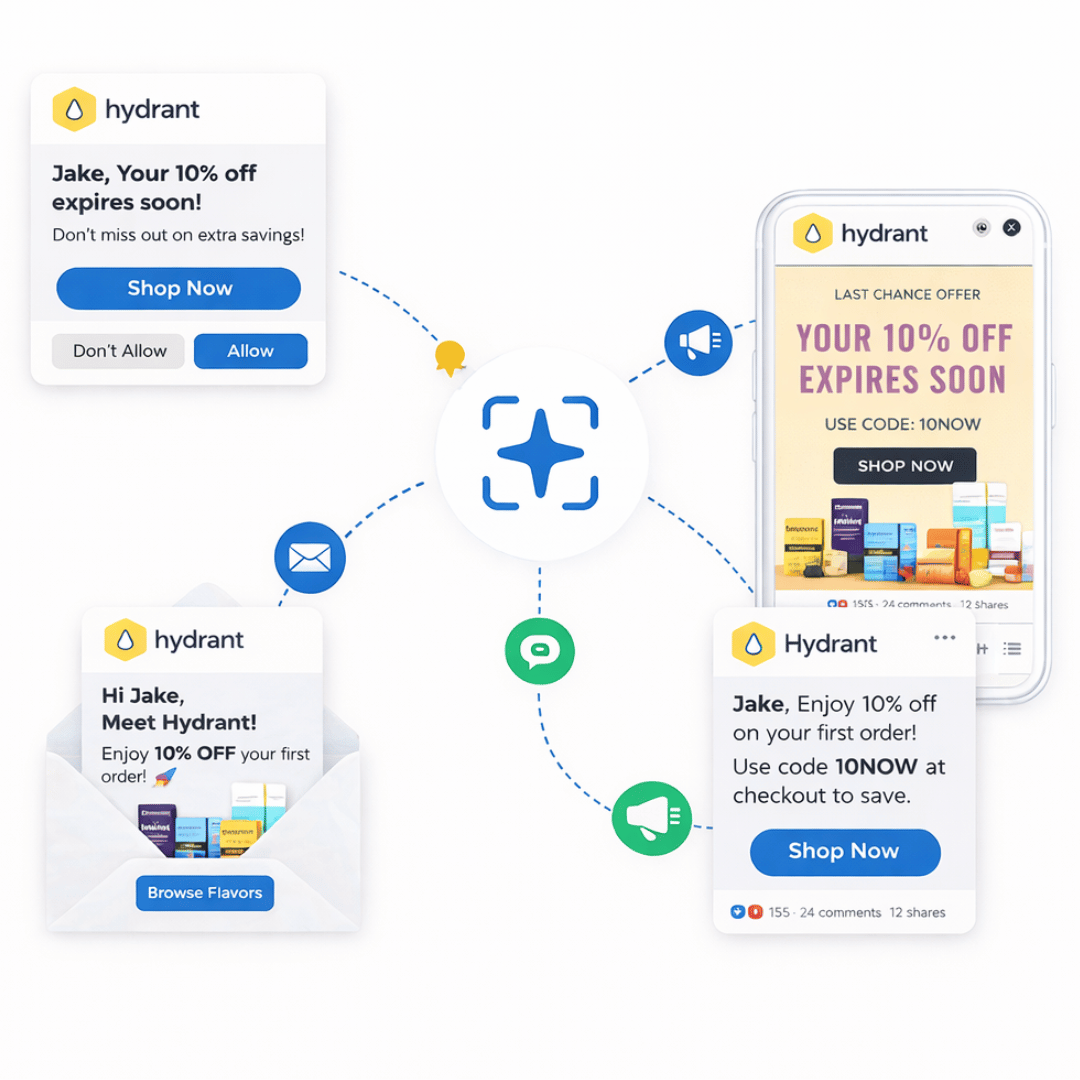
This is what marketing automation software offers right now to a UK service business with a modest monthly investment, yet 80% are still convinced that trading time for money and doing tasks that should be automated is a good idea. The difference in capacity a CRM marketing automation system creates is significant. A team of five managing their client work through a properly configured marketing automation system can handle the volume of a team of eight or nine operating manually. Imagine getting the output of an additional 10%, 20%, 30% without increasing headcount. Without increasing the salary bill. Imagine what that means for your profit margins. All of a sudden, efficiency becomes your competitive advantage. And it's exactly what MSM builds for UK service businesses, CRM marketing automation systems designed around your pipeline.
Marketing intelligence: scoring every digital interaction your leads make
Most businesses treat all leads the same. Someone who visited your website once gets the same follow-up as someone who visited five pages, downloaded your pricing guide, opened three emails and clicked your booking link twice. Throwing the same response at different buying signals makes zero sense and this is why I'm a huge fan of lead scoring inside marketing automation software.
Lead scoring will change your entire marketing automation model. If you do it properly. The idea is every digital interaction a prospect makes gets assigned a point value inside your CRM marketing automation system. A website visit might score 5 points. Opening an email scores 10. Clicking a link in that email scores 15. Downloading a resource scores 25. Visiting your pricing page scores 30. Returning to the site for a third time in two weeks scores 50. Subscribing to your email list might get 50 points.
As those points add up, your lead moves through your marketing automation funnel from cold to warm, from warm to hot, from scanning to the buying phase. The terminology that matters here is the shift from scanning to hunting. A scanning prospect is browsing, comparing and gathering information to decide if they should even consider what you do. They're not close to buying. A hunting prospect is evaluating options, visiting pricing pages, downloading specifics and comparing suppliers. The intent is different, the engagement is different and the signals are different. The lead scoring inside your marketing automation system is the mechanism that reports that back to you. The higher the lead score over time, the more interest that lead has in what you sell and the more likely they are to buy.
According to Salesforce's State of Marketing Report, high-performing marketing teams are 3.2 times more likely to use lead scoring in their marketing automation software than underperforming ones. HubSpot's research shows that businesses using lead scoring in their CRM marketing automation systems see a 77% increase in lead generation ROI compared to those that don't.
The practical implication for a UK service business is significant. Rather than your sales team working through a list of every enquiry in chronological order, they work through a prioritised list of the most engaged prospects first, the ones whose behaviour has already told your marketing automation system they're close to a decision. Cold leads stay in an automated nurture sequence until their score rises. Hot leads get a personal call.
This is what it means to have marketing intelligence rather than just marketing data. The marketing automation software doesn't just capture interactions. It interprets them, ranks them and routes the right prospects to the right action at the right time, automatically, 24 hours a day, even when you're on holiday. No more "Dave, did you follow up on that lead?" "Not yet, it's on my list." Why wait for Dave.
Content creation and distribution across every digital channel — from one marketing automation system
The second transformation reshaping UK SMEs is what's happening at the content and distribution layer. Most SMEs don't have the time or the headcount to manage a full blown marketing team producing consistent content. Well that's another thing CRM marketing automation systems have changed.
Creating content used to mean hiring a copywriter, briefing a social media manager and managing a calendar manually across LinkedIn, Instagram, Facebook, email and your blog. Each channel had its own tool, its own workflow and its own reporting. Understanding what was working required someone to manually consolidate data from five different dashboards, spending hours doing so and then reporting back to you, just so you could spend more hours trying to understand what it all meant. What a waste of time that was.
Modern marketing automation platforms consolidate all of that into a single system, a single dashboard with clear performance metrics.
The new reality is this.
Content is created once inside your marketing automation software and distributed across every single digital channel from one place. Scheduling is automated so you don't have to worry about it when Dave is sick or the business is shut down for two weeks in the summer. Performance data feeds back into the same CRM marketing automation system so you can see everything live, all of the time, without someone wasting hours pulling the information together. You can see which email subject line drove the most clicks, which LinkedIn post generated the most profile visits and which landing page converted the highest percentage of paid traffic, all from the same marketing automation dashboard, all of the time.
For UK small businesses, content consistency has a direct commercial impact. HubSpot's data shows that businesses publishing consistently across channels through marketing automation software generate 67% more leads per month than those with irregular publishing. Consistency used to require headcount. Not anymore. Now it requires a marketing automation system that costs less than a Costa coffee.
Do you think that's all their party tricks done yet? Not even close.
How marketing automation is replacing the cold call and still prospecting 24/7
The most commercially significant shift in marketing automation software over the last two to three years is what's happening at the top of the funnel. Prospecting used to mean a sales person working through a list, making calls, sending emails, chasing responses. Or not, in many cases. It was expensive, massively inconsistent from person to person and entirely dependent on individual effort, time of the week and what the weather was doing.
CRM marketing automation systems change every single part of that outdated equation.
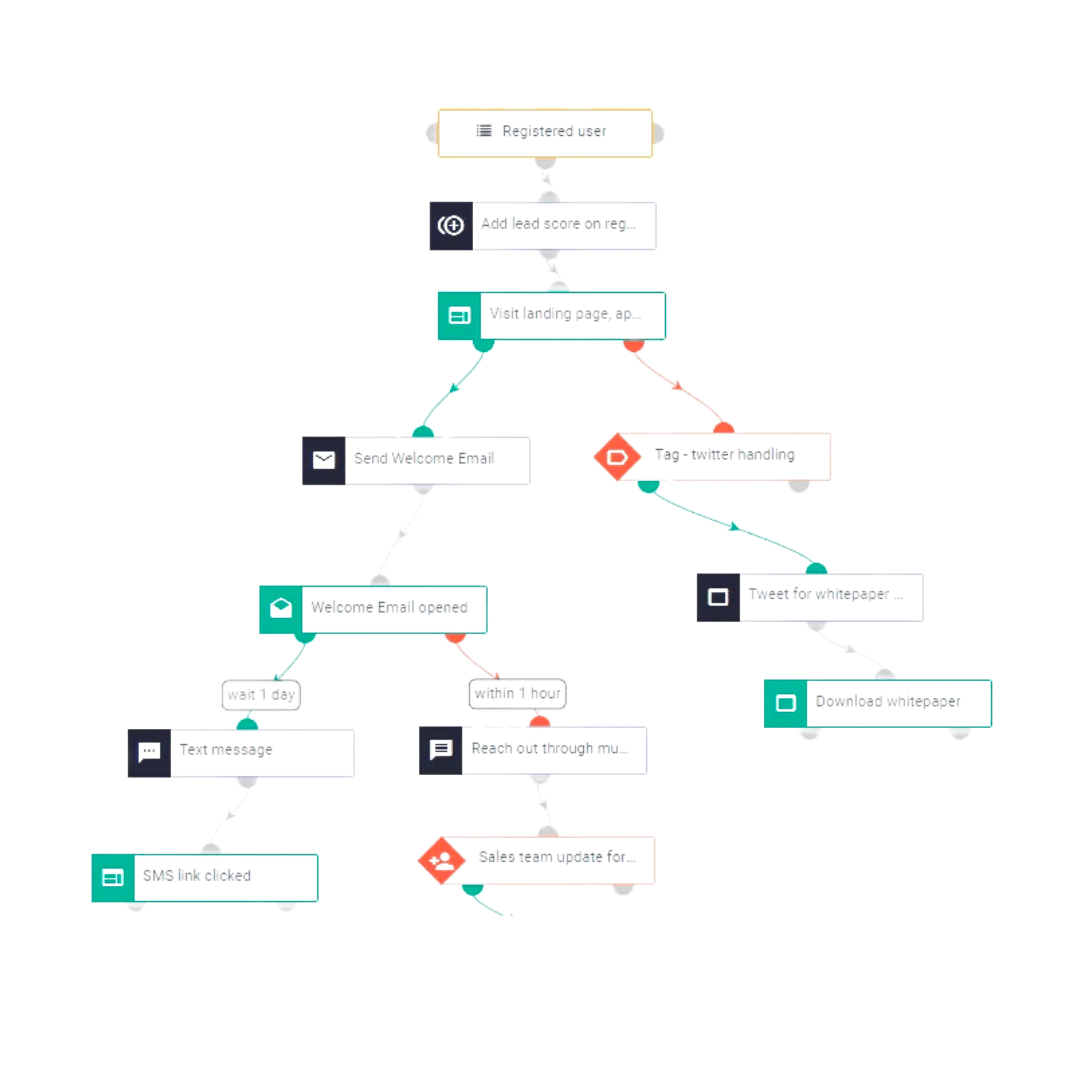
A properly built marketing automation sequence can identify target businesses from verified data sources, send a personalised first contact, follow up at predefined intervals, track opens and clicks and route warm responses directly to a sales person for a human conversation, or an AI agent response if that floats your boat, all without anyone touching it manually. The marketing automation system runs at 3am on a Sunday with the same consistency it runs at 10am on a Tuesday and it runs Christmas Eve, Christmas Day and every bank holiday with the same measurable consistency.
According to AIRA's 2026 research, businesses using marketing automation software for outbound systems generate a 3.5% or higher reply rate compared to the 1 to 2% industry standard for manual outreach. At scale, that difference is the difference between a pipeline that trickles and one that flows consistently.
Let me give you a real example.
A business buys a 1,000 contact cold list. They send one email without any marketing automation system behind it and get a 25% open rate. That's 250 people who opened it once. Of those, 2% click through to the website. That's 5 people. Those 5 people land on a website that wasn't built to convert, get distracted, get lost and leave. But one plucky lead who figured out where the contact form was managed to reach out.
There's no automated second email from a marketing automation system. No third. No lead scoring to identify high engagers. No website tracking to see who came back. Just one shot, a cross of the fingers and whatever comes out the other end is what they get. The cost per lead is huge and the cost per acquisition is eye watering.
But despite all that, the campaign is deemed a success. Everyone is chuffed they got a lead and the whole process is seen as a massive victory. 999 leads wasted. 1 sale that just about covers the cost of the dataset. If you had a sales person with a performance track record like that, you'd sack them.
That madness is now engineered out.
Every lead continues to be nurtured by the marketing automation system at different rates, with different content, tailored to exactly how they interact with your brand. What they download, what they click, what they show interest in. The CRM marketing automation software responds to their behaviour, not a generic schedule.
Your cost per lead drops. Your cost per acquisition drops. Lead conversions increase and the bottom line looks better than it ever has off a cold list.
More importantly, your customer satisfaction scores go up. Because leads get exactly what they need at every stage of your marketing automation funnel, helping them decide whether working with you is a safe bet. No pressure. No irrelevant emails. Just the right message at the right time until they're ready to buy or they're not.
The implications for a UK small business are straightforward. You don't need a larger sales team to build a larger pipeline. You don't need a bigger marketing budget to get more leads. You don't need to start at 4am to get more done. You need a better marketing automation system. One that in many cases costs less than your daily lunch.
AI integration is already built into marketing automation software
AI is the biggest buzz word in business right now and in many CRM marketing automation platforms, it's already integrated. And it's fair to say this will have a dramatic impact on how all businesses operate, forever. Being late to the party with AI and marketing automation software could potentially hurt your business more than anything else.
AI-driven marketing automation is already moving from early adopters to mainstream business use across the UK and US. Rather than sending the same sequence to a list of target companies, AI-powered CRM marketing automation systems analyse individual buying behaviours and signals like website visits, content downloads, job changes, funding announcements and technology stack changes, and trigger outreach at the exact moment a prospect's behaviour indicates purchase intent.
Forrester predicts that by 2027, businesses using AI-driven intent data in their marketing automation systems will see 40% higher conversion rates from outreach campaigns compared to those using static lists. For UK SMEs, the competitive implication is significant. The largest enterprises already have access to these marketing automation tools, just like they had access to CRM marketing automation systems years before SMEs did. What's changed is that platforms like HubSpot, Salesforce and GoHighLevel are bringing AI-driven marketing automation software into a price range that a ten-person service business can afford. The window between early adoption and mainstream adoption is closing, quickly. The businesses that build these marketing automation systems in the next 12 to 18 months will have a structural advantage that compounds over time. The businesses that wait will spend those same months playing catch up and potentially never find the same margins their competitors have, because they can't find the same efficiencies through their business.
What this means for your business right now
What marketing automation software and CRM systems a business runs hasn't always been top of the agenda. But it is now. How a business integrates marketing automation technology has become a priority growth decision.
The question isn't whether these marketing automation systems work. The evidence from Salesforce, HubSpot, Forrester and McKinsey is conclusive. The question is whether you can afford it and whether it will work for you. For most businesses it doesn't come down to whether the marketing automation software makes sense. It comes down to whether the risk of buying something you've never used before is too high. And that usually comes down to a lot of unanswered questions.
If you want to understand what a CRM marketing automation system would look like for your business, ask us as many questions as you like. MSM builds and manages CRM marketing automation systems for UK service businesses. We'd be happy to show you what marketing automation software could look like for yours. Advice is free.
Conversion rate optimisation improves every step from attention to closed sale. Learn how MSM finds leaks across marketing, sales, CRM and follow-up.
How full-funnel marketing is transforming how businesses think about sales and marketing.