


Can Video Content Improve Website Conversion Rate?

Should You Have Video Content on Your Website?
8 min read.
Featured image
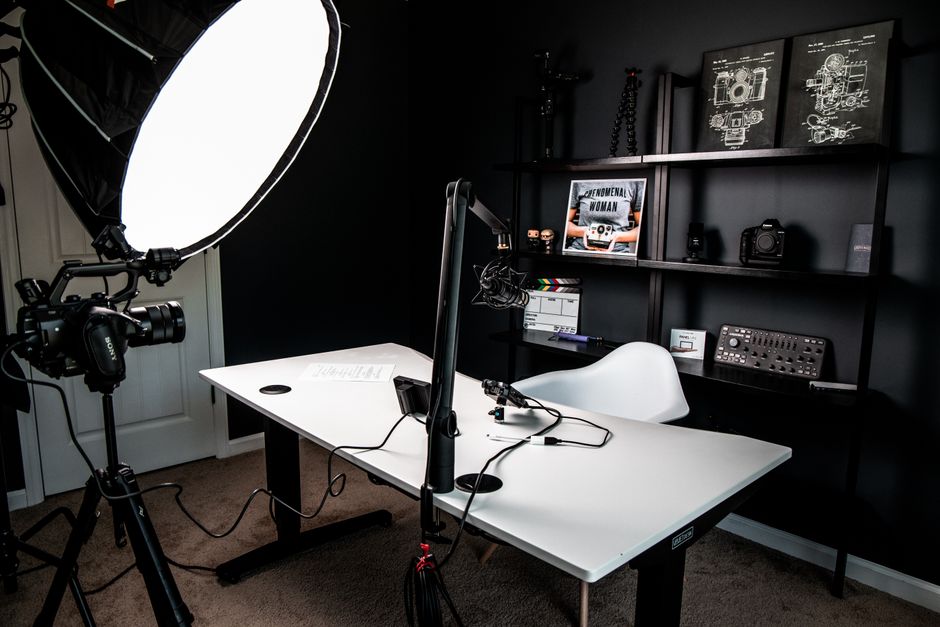
Photo by Chelsey Horne on Pexels
Most businesses treat video content as a marketing add-on. Something you do when you've got spare budget or time. A nice-to-have you bolt on after everything else is sorted.
That's the wrong way to look at it entirely.
If you're trying to improve conversion rates on your website, video is one of the highest-impact changes you can make. It's not separate from your CRO strategy. It is your CRO strategy, at least for a large chunk of what makes visitors stay, trust you, and take the next step.
In this article, we'll break down exactly why video matters for website conversion, where it fits into a proper CRO framework, and what a smart, practical approach looks like for a UK service business in 2026.
Why Your Website Conversion Rate Is the Metric That Controls Everything
Before we get into video specifically, let's frame the problem properly.
Your website conversion rate is the percentage of visitors who take a meaningful action. Book a call, fill in a form, request a quote, download something. Everything else, traffic volume, ad spend, social media following, means nothing if the site doesn't convert.
The UK B2B average sits somewhere around 2% to 4% for service businesses. That means if 1,000 people visit your site this month, only 20 to 40 of them take any action at all. The other 960 to 980 leave. Just leave...
Most businesses respond to this by spending more on ads. Which blows my mind. More traffic. More spend. Same leaky problem. The visits go up. The enquiries stay poor and then ad spend increases again.
Fixing conversion architecture is the only answer. And video is one of the fastest, most measurable tools for doing exactly that.

What Video Does to a Visitor's Brain
Let's talk about what's really happening when a cold visitor lands on your website.
They've never spoken to you. They don't know if you're credible, whether you understand their problem, or whether you can actually deliver what you're promising. They're scanning for reasons to leave, not reasons to stay.
Text alone struggles to bridge that gap quickly enough, especially as attention spans are getting shorter. Static pages with service descriptions and bullet points don't build trust at speed. They might communicate what you do, but they're far worse at communicating who you are.
Video changes that dynamic.
A well-produced 60-second explainer on a service page tells a visitor more about your positioning, your confidence, and your competence than most 1,500-word pages ever will. A short piece of direct-to-camera content from a founder or senior team member signals that there are real people behind this business who know what they're talking about.
That trust signal is enormously valuable. It reduces friction. It compresses the decision-making timeline. And it keeps people on the page long enough for the rest of your conversion architecture to do its job.

The Three Places Video Has the Biggest Impact on Conversion
Not all video placements are equal. These are the three areas that move the needle most on a service business website.
1. The Homepage Hero Section
The homepage hero is one the most valuable bit of real estate on any website, this is where most visitors form their first real impression of your business. They decide within 3 to 5 seconds whether they're staying or leaving.
A well-placed background video or a short autoplay loop in the hero section doesn't need to be a full production, but what it does needs to do is show your work, your environment, or your people in a way that immediately communicates, this is a real, capable business who can help the customer.
The homepage hero isn't the place for a talking-head explainer. It's the place for motion, atmosphere, and a visual statement of who you are. Keep it short. Keep it tight. Make sure it doesn't slow your page load to a crawl. Top tip. Compress it properly or host it externally on Vimeo or other.
2. Service Pages
This is where video earns its money for conversion.
A visitor on your CRO service page or your marketing automation page has already shown enough interest to navigate there. They're in evaluation mode. This is the moment where a 90 to 120-second explainer that clearly walks through the problem you solve, how you solve it, and what makes your approach different can be the deciding factor between an enquiry and a bounce.
The key word is clarity. Not production gloss. Not a cinematic brand video. A clear, confident explanation of what you do, who it's for, and what they should do next.
If you're recording this yourself on a good camera with a decent microphone, natural light, and a clean background, it's entirely usable. The content and the confidence matter far more than the kit.
3. Case Studies and Testimonial Pages
Written testimonials are fine. Video testimonials are significantly more powerful.
A client talking directly to camera about a result they achieved with you is one of the strongest trust mechanisms available on a B2B website. It's not you claiming to be good. It's someone else saying it, on screen, with their face and their voice behind it.
If you work with clients who'd be willing to give a short 2 to 3 minute on-camera testimonial, that content is some of the most valuable footage you can have on your site. It converts at a level that no written case study can match.
DIY vs. Professional Production: The Real Question
This is where most small and medium-sized businesses get stuck. They know video would help. They're not sure they can justify a professional production budget. So they do nothing.
The honest answer is that you don't need to spend thousands on every piece of video content. What matters is fitness for purpose.
A homepage hero loop or a flagship service page explainer is worth investing in properly. These are the highest-traffic, highest-stakes pages on your site. A poorly shot, poorly lit video in this position can actively damage conversion rather than improve it. The visual quality signals the quality of your service. If the video looks amateur, some visitors will assume the work does too. That's an unfair association, but it's a real one.
For secondary content, quick team introductions, behind-the-scenes clips, FAQ videos, and supporting material, a modern smartphone with good light, a decent external microphone, and a clean background produces entirely acceptable results.
The structure that works for most UK service businesses is this: invest properly in your two or three flagship videos, the homepage and your core service pages. Handle everything else in-house. That keeps costs manageable and ensures your highest-conversion pages are performing at the level they need to.
What Makes a Website Video Actually Convert
Most businesses produce video content that looks fine but doesn't convert. Here's why and what to do differently.
Start with the problem, not your company
The most common mistake in service business videos is opening with the company. Who you are, how long you've been around, how passionate you are about what you do. None of that information is what a cold visitor needs in the first 10 seconds.
They need to hear their problem articulated back to them. That's what makes them lean in. Open with the problem. Then move to the consequence of leaving it unsolved. Then position your solution. That's the sequence that converts.
One clear call to action
Every video on a service page should have a single, obvious next step. Book a call. Request an audit. Download a guide. Not three options. One. The more choices you give people, the fewer of them take any action at all.
Place the CTA at the end of the video and mirror it with a button or form immediately below the video player. Don't make someone search for what to do next after they've just watched your content and decided they want to move forward.
Captions are non-negotiable
Roughly 85% of social video is watched without sound. That figure is slightly lower on websites where people are in a more active browsing mindset, but it's still high enough to make captions essential rather than optional.
A viewer who can't follow your video because they're in an open-plan office or on a train will bounce. A viewer who can read along will stay. Always caption your website videos. It also helps with accessibility and, increasingly, with how Google's crawlers process your page content.
Keep it shorter than you think it needs to be
The average viewing time on a website video drops significantly after the 90-second mark. Unless you're running a detailed tutorial or a case study interview, aim for 60 to 90 seconds on service pages. Every unnecessary sentence is a chance for the viewer to stop watching before they reach your call to action.
Say what needs to be said. Cut the rest.
Video and SEO: The Secondary Benefit Most Businesses Miss
There's a conversion argument for video, and then there's a traffic argument.
Google's algorithm increasingly favours pages with rich media. A page with a properly hosted video, a relevant title tag, a transcript or accurate captions, and a strong engagement signal from visitors spending time watching it, ranks better than a comparable page without those signals.
Video also significantly reduces bounce rate. Bounce rate has a complicated relationship with search rankings, but the underlying mechanism is simple: if people land on your page and immediately leave, Google infers the page didn't satisfy the search intent. If they stay to watch a video, that engagement signal improves the page's perceived relevance.
For a service business actively working on its organic search visibility, adding video to core service pages isn't just a conversion play. It compounds into better rankings over time, which means more qualified traffic arriving at a page that now converts at a higher rate. Both levers move in the right direction simultaneously.
A Practical Starting Point for 2026
If you're a UK service business looking at this practically, here's where to start without overcomplicating it.
Pick your single most important service page. The one that gets the most traffic, or the one that represents the highest-value offer. Commission a short, professionally produced 90-second explainer for that page. Brief it around the problem you solve, not around your company. End it with a single clear call to action. Make sure it's captioned, compressed properly, and hosted externally so it doesn't affect your page speed score.
Measure the conversion rate on that page before and after. Most businesses see a meaningful uplift within the first 30 days. That data then justifies the next video investment.
That's it. Start with one page. Measure. Roll it out.
Don't try to produce twelve videos at once, run out of budget, and end up with a mixture of polished and poor-quality content scattered across the site. One page done properly is more valuable than a dozen done at varying standards.
What This Looks Like at MSM
At MSM, we approach video as a conversion tool first and a brand asset second. Every recommendation we make around video production starts with the question: which page is leaking the most potential revenue, and would video close that gap?
For most of our clients, the answer is their primary service page. The page that carries the most commercial intent but currently lacks the trust architecture to convert the traffic it receives.
A short, confident, well-lit video on that page changes the visitor's experience in a way that's almost impossible to replicate with text alone. The enquiry volume tends to follow.
If you want to understand exactly where your site is losing conversions and whether video is part of the answer, our free CRO audit gives you a specific breakdown of what's costing you leads and revenue right now.
Find What's Costing You Leads, Sales and Revenue →
Frequently Asked Questions
Does video on a website actually improve conversion rates?
Yes. Adding a relevant, well-produced explainer video to a service page consistently improves the percentage of visitors who take a meaningful action. The mechanism is trust: video builds credibility and communicates competence faster than text, which reduces the hesitation that prevents cold visitors from converting.
How long should a website video be?
For service pages, aim for 60 to 90 seconds. That's enough time to articulate the problem, present your solution, and deliver a single clear call to action. Longer than 2 minutes sees significant drop-off unless you're running a detailed case study or tutorial format.
Does video affect SEO and Google rankings?
Indirectly, yes. Pages with video tend to have lower bounce rates and higher average time-on-page, both of which are engagement signals that influence how Google assesses page quality. A properly structured video page with captions and schema markup can also appear in video-specific search results, which increases visibility.
Do I need professional equipment?
It depends on the page. For high-traffic, high-stakes service pages, professional production is worth the investment because visual quality directly influences perceived credibility. For secondary content, a modern smartphone, good natural light, and a clean background produces entirely usable footage.
What's the best way to host video on a website without slowing it down?
Host videos externally, either through Vimeo or YouTube, and embed them on the page rather than uploading the raw file directly to your site. This keeps your page load speed intact, which matters both for SEO and for the experience of visitors on slower connections. Always use a custom thumbnail that matches your brand.
Conversion rate optimisation improves every step from attention to closed sale. Learn how MSM finds leaks across marketing, sales, CRM and follow-up.
How full-funnel marketing is transforming how businesses think about sales and marketing.